
 Military & Government
Over the past decade, cybersecurity awareness has become a foundation of security strategies. From mandatory training sessions and phishing simulations to password policies and multifactor authentication (MFA), organisations have invested significant time and resources into educating employees about cyber threats. As a result, today's workforce is more familiar with phishing scams, ransomware, password hygiene, and online fraud than ever before.
Yet despite this progress, cyberattacks continue to increase in both frequency and sophistication. Ransomware remains a persistent threat, phishing campaigns have become increasingly convincing, particularly with the use of AI, and human error continues to play a central role in many successful attacks. This raises an important question: if people know more about cybersecurity than ever before, why do organisations remain so vulnerable?
Awareness Has Never Been Higher, So Why Are Attacks Still Succeeding?
Recent research suggests that the issue is no longer a lack of awareness. According to the National Cybersecurity Alliance's Oh, Behave! Cybersecurity Attitudes and Behaviors Report, awareness of key security practices has risen significantly in recent years. Awareness of MFA, for example, increased from 52% in 2021 to 77% in 2025. However, this growing awareness has not translated into stronger security habits. The percentage of people who always install software updates promptly dropped from 44% to 31%, while those who consistently check for signs of phishing fell from 51% to 36%. During the same period, the proportion of respondents reporting that they had experienced cybercrime increased from 34% to 44%.
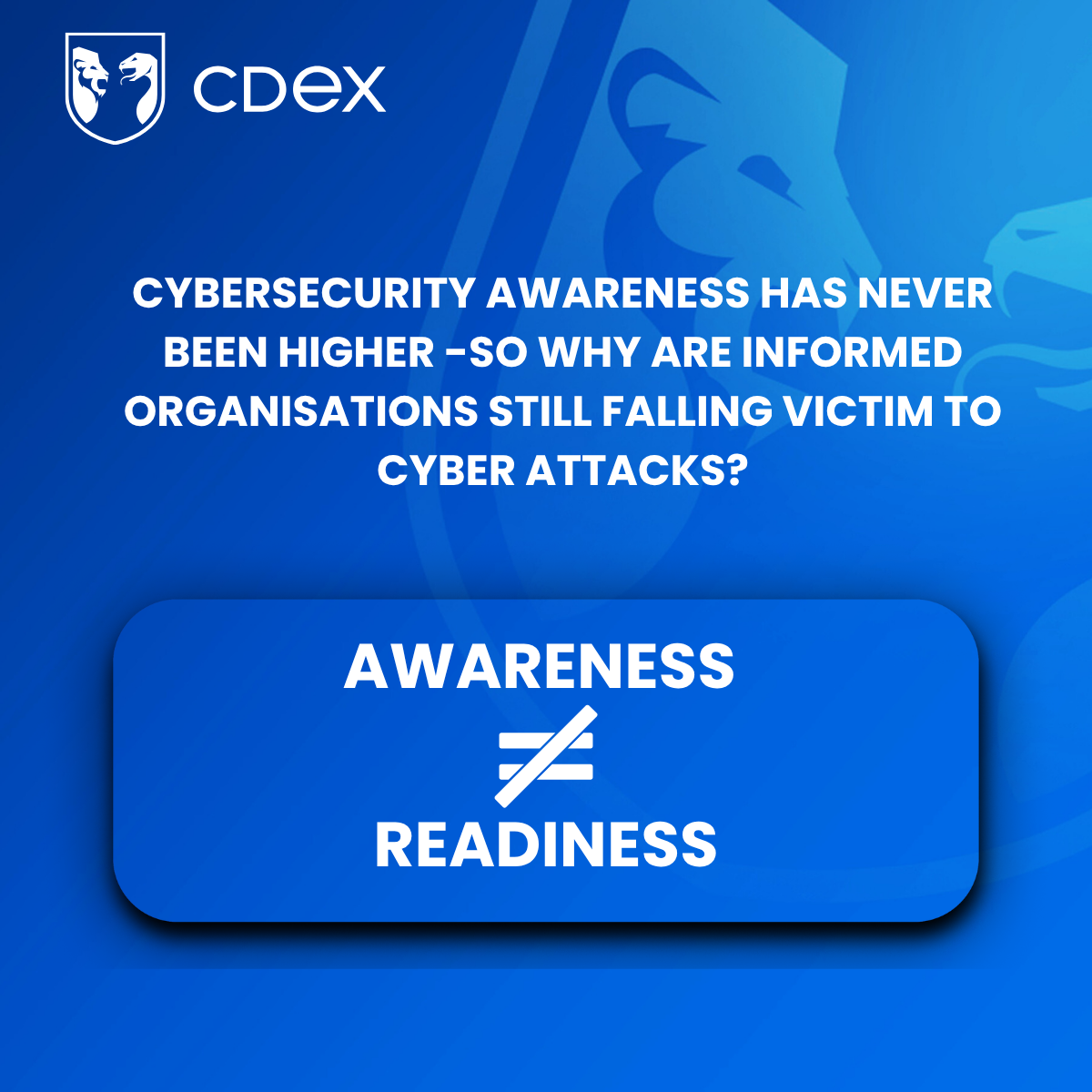
This disconnect reveals one of today's biggest cybersecurity challenges: awareness does not automatically lead to action. Employees may recognize cyber risks, understand best practices, and even complete annual security training, yet still make decisions that expose their organisations to threats. Whether due to cognitive overload, competing priorities, security fatigue, or increasingly complex digital environments, knowing what to do is not always enough to ensure people actually do it.
As AI-powered attacks, sophisticated social engineering, and hybrid working environments reshape the threat landscape, success depends on more than simply educating users. It requires building cyber readiness - the ability for individuals and teams to recognize threats, make sound decisions under pressure, and respond effectively when incidents occur. Closing the gap between awareness and readiness is no longer just a training challenge. It is a critical component of cyber resilience.
Secure Behavior Isn't Simply a Matter of Knowledge
Cybersecurity decisions are rarely made in ideal conditions. They happen in the middle of busy workdays, under time pressure, and amid a constant stream of notifications and competing priorities.
One of the biggest challenges is cybersecurity fatigue. As users are exposed to an increasing number of security alerts, password prompts, software updates, and awareness messages, they can become overwhelmed or desensitized. Recent research found that 43% of respondents feel overloaded by the amount of cybersecurity information they receive, a significant increase from previous years. At the same time, concern about becoming a victim of cybercrime continues to grow.
Convenience also plays a major role. Even employees who understand the importance of enabling MFA or installing updates may postpone these actions if they interrupt their workflow. As cybercriminals increasingly exploit AI to create highly convincing phishing emails and social engineering attacks, these small moments of inattention can have serious consequences.
Traditional Cybersecurity Training Isn't Enough
For many organisations, cybersecurity awareness training is still centered around annual compliance courses, presentations, and quizzes. While these initiatives are effective at increasing knowledge, they often fall short of creating lasting behavioral change. Employees may complete the training, pass the assessment, and still struggle to apply what they have learned when faced with a real cyber incident.
If awareness is the foundation of cybersecurity, practice is what transforms it into readiness. Just as fire drills prepare people to respond calmly in an emergency, cyber defense exercises help teams develop the skills and confidence needed to handle real-world incidents.
Rather than simply testing what employees know, realistic exercises allow them to apply that knowledge in a controlled environment. Participants learn to identify threats, make decisions under pressure, communicate effectively, and follow incident response procedures - all without the consequences of a real attack. These experiences reinforce secure behaviors and reveal gaps that traditional training often misses.
Building a Culture of Cyber Readiness
Regular cyber exercises, timely updates on emerging threats, and leadership that actively supports cybersecurity all help keep security top of mind. Equally important is making secure behavior as simple and intuitive as possible, reducing the friction that often leads employees to bypass security measures.
Ultimately, cybersecurity is a shared responsibility. By fostering a culture where everyone understands their role and has the opportunity to practice it, organisations can build resilience that extends far beyond compliance and strengthens their overall security posture.
Exercise platforms enable companies to run structured, repeatable cyber defense exercises tailored to different roles, skill levels, and objectives. Whether simulating phishing campaigns, ransomware attacks, or broader incident response scenarios, these exercises help transform cybersecurity from a theoretical concept into a practical capability. By practicing regularly in a safe environment, teams build the confidence, resilience, and readiness needed to respond effectively when a real attack occurs.
Ready to move beyond awareness?
Cyber readiness isn't built through presentations alone. With CDeX, organisations can run realistic cyber defense exercises, validate incident response plans, and strengthen the skills that matter during real-world incidents. Explore how CDeX helps teams transform cybersecurity knowledge into operational readiness.
Table of contents